.png)
Small Shifts, Big Changes: The Power of Tiny Transformations
- EmpoWired

- Nov 16
- 4 min read
You decide to change everything.
You’re going to wake up at 5 AM, work out, meditate, and have a healthy breakfast — all before work.
This is the new you.
A week later, you’re back to hitting snooze, scrolling through your phone, and rushing out the door for a donut.
The problem isn’t a lack of willpower.
It’s biology.
To see why the big, dramatic changes fail — and why tiny shifts succeed — we need to look at how your brain is wired.

Why Big Changes Fail
Your brain’s main job is to keep you safe and efficient.
To do that, it automates as much as possible — turning familiar actions into habits.
But when you try to change too much, too fast, two key systems go to war:
The Amygdala
This part of your brain constantly scans for threats.
A sudden change — like deciding to run five kms every day when you haven’t jogged in years — feels dangerous.
The amygdala sounds the alarm, releasing stress hormones that trigger resistance and overwhelm.
The Prefrontal Cortex
This is the thinking part of your brain — the one that plans, decides, and uses willpower.
When the amygdala panics, the prefrontal cortex steps in to calm things down.
But willpower burns energy fast, and when that energy runs out, your brain defaults to what’s familiar.
So when big changes fail, it’s not a lack of discipline.
You’ve been fighting your own survival system.
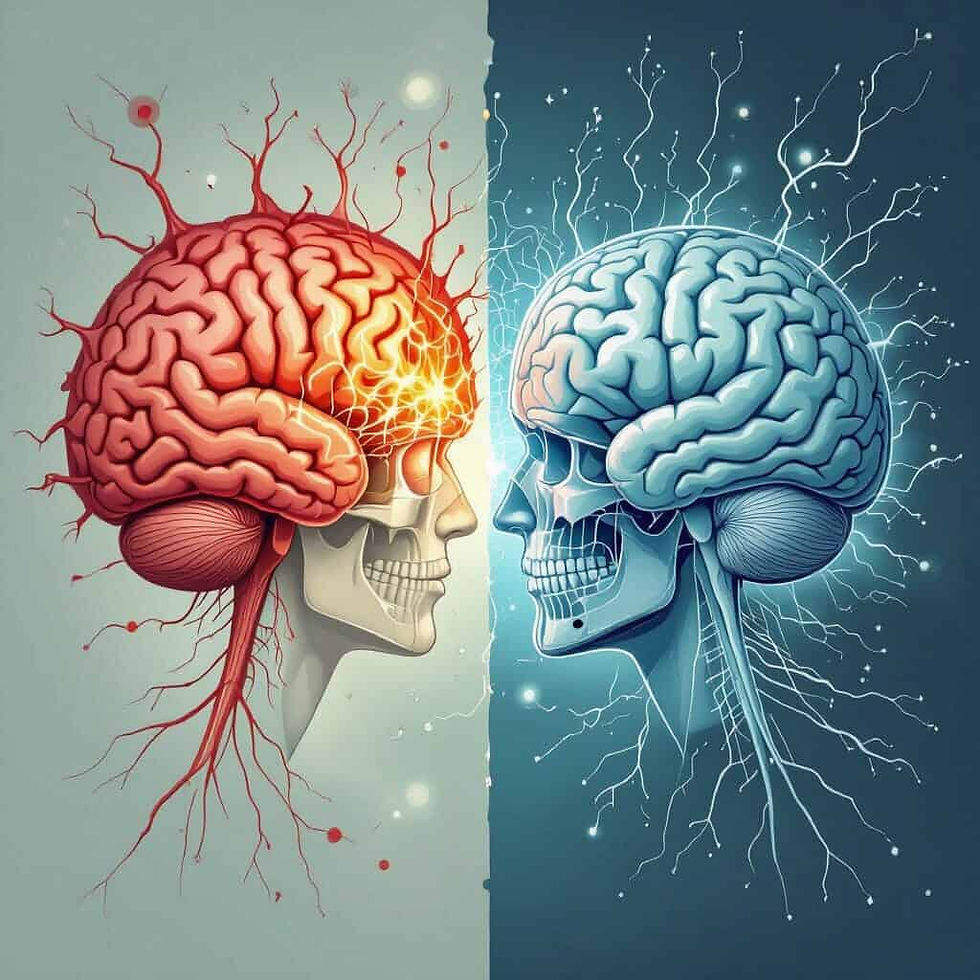
How Small Shifts Rewire Your Brain: The Magic of Neuroplasticity
A small shift is a quiet revolution.
It’s too tiny to trigger the brain’s alarm, yet powerful enough to start changing it from within.
When you make a drastic change, your internal “security system” sounds the alarm: Danger! Too much, too fast.
You feel resistance, dread, or overwhelm.
But a small shift — like doing one push-up, taking a deep breath before reacting, or adding one vegetable to your meal — feels safe.
No alarm = no stress response.
No stress = no battle with willpower.
And here’s the magic: every time you complete that small, safe action, your brain gives you a dopamine hit — a little burst of satisfaction that says, Let’s do that again.
That’s how new neural pathways begin to form.
Neuroscientists call this process neuroplasticity — your brain’s ability to rewire itself through repetition.
In simple terms: "neurons that fire together, wire together".
Each small shift strengthens a new pattern, making it easier and more natural over time.
You’re not forcing change.
You’re teaching your brain that change can feel good — that safety and growth can coexist.
And as these new patterns take root, old limiting beliefs lose their grip.
Change doesn’t happen to you — it happens within you.

The Power of 1%: Compounding Over Time
Imagine a ship adjusting its course by just one degree.
At first, it seems like nothing — barely noticeable.
But over a long journey, that tiny shift leads to an entirely different destination.
Your daily choices work the same way.
A 1% shift today may not look like much, but over time, it completely changes your destination.
One extra page a day is 365 pages a year — a full book.
A five-minute walk at lunch becomes over 20 hours of movement in a year.
Adding one vegetable to your plate becomes hundreds of better choices compounded over time.
Consistency — not intensity — is what transforms everything.
These shifts don't require herculean effort. They require consistency.
And consistency is built on a foundation of actions so small, they’re almost impossible not to do.

Your Small Shift Starter Kit
Ready to start? Make it so small it feels almost silly to skip.
For Your Mind & Mood:
Instead of: “I’ll meditate for 20 minutes every morning. ”Try: “I’ll take three conscious breaths before opening my phone.”
Instead of: “I’ll write a gratitude journal every night.” Try: “I’ll think of one good thing as I brush my teeth.”
For Your Body & Health:
Instead of: “I’ll go to the gym for an hour every day.” Try: “I’ll stretch for one minute or do 10 squats while the coffee brews.”
Instead of: “I’m cutting out all junk food forever.” Try: “I’ll add one healthy food to my meal.”
For Productivity & Focus:
Instead of: “I’ll organize the whole house.” Try: “I’ll clear just one surface.”
Instead of: “I’ll finish this huge project.” Try: “I’ll open the file and write one sentence.”
For Relationships:
Instead of: “I’ll be more social.” Try: “I’ll send one kind message today.”
Instead of: “I’m going to become the perfect, most supportive partner.” Try: “When my partner walks into the room, I’ll look up from my screen and smile.”

Shift Your Identity, Not Just Your Actions
Small shifts don’t just change what you do — they shape who you are becoming.
Reading one page makes you a reader.
Taking a short walk makes you an active person.
Sending that message makes you a connected one.
The goal isn’t perfection — it’s identity.
You’re not trying to do something new; you’re learning to be someone new.
How to Start Your Shift Today
|
Conclusion : Consistency Over Perfection
You will have off days. You will forget. You will be too tired.
That's okay. What matters is showing up again and again.
Follow one simple rule: Never miss twice.
Missed a workout? It happens.
Just make sure you get back on track the next day.
One missed day is an accident. Two missed days is the start of a new, unwanted habit.
This simple rule lets you stay consistent while being human — no guilt, no pressure.
Transformation isn’t an event; it's a process.
It’s the sum of a thousand tiny, intentional choices that quietly build the person you want to be.
Forget trying to do it perfectly. Forget expecting overnight results.
Real change is a quiet, steady process of small, smart choices.
What is the one, tiny, almost-too-easy-to-mention shift you can make today?


